
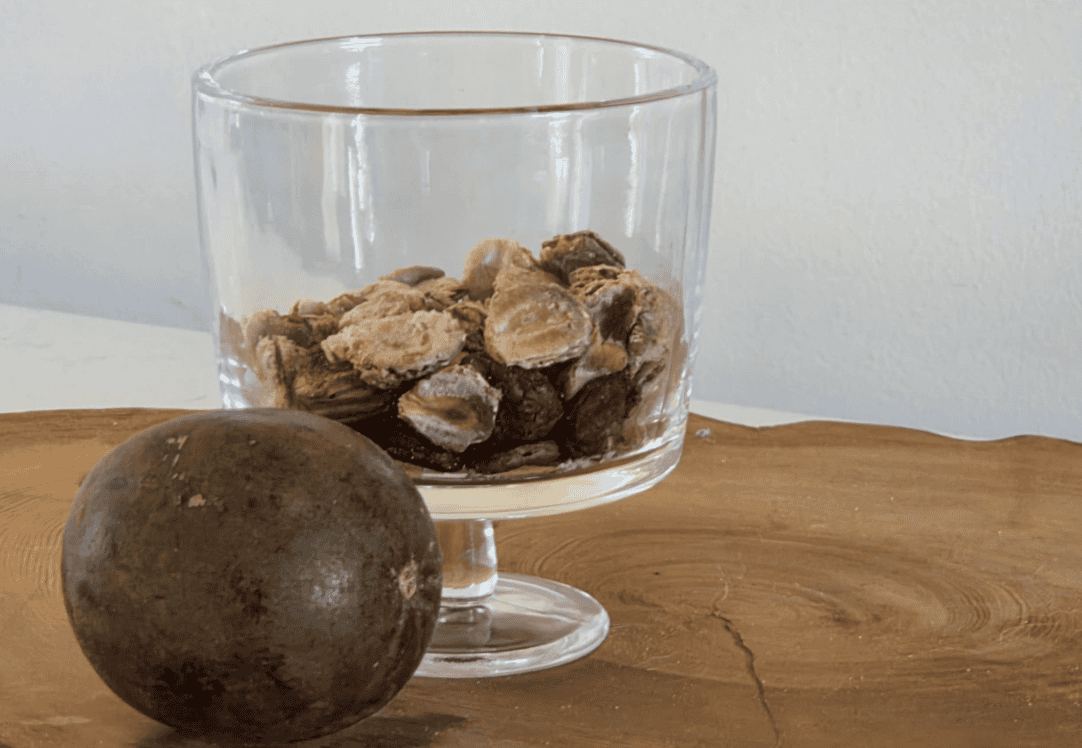
Mums of diabetic kids will know the struggle…. making sure your child doesn’t miss out on sweet treats, while caring for their rather challenging health. Alternative sweeteners have come under fire for their side effects, health risks, dodgy ingredients and frankly, their chemical flavour. I’m a bit obsessed with low-carb cooking ever since my partner developed type 2 diabetes. The struggle to create diabetic sweets, that someone actually wants to eat….it’s a full-time job.
Monk fruit sweetener is the gold standard. Completely natural, doesn’t cause sugar spikes and tastes like…well sweetness. In fact, it’s 200 times sweeter than cane sugar, so a tiny bit goes a very long way. At the supermarket, you’ll find it in the baking aisle – for $16 a small pack, and that pack contains just 5% monkfruit. The rest is all those fillers you’re trying to avoid. The good news is, it’s so simple to make your own monkfruit syrup at home.
Sourcing monk fruit in Australia
Monkfruit has been a staple in Chinese cooking since the 13th century. It’s not…a magical fad. Up until it became trendy, you could buy a dried monk fruit at your local Asian grocer for $2. They were part of soup mixes or for sale in the spice section. Now, they’re in high demand and it’s almost impossible to find them at your local store. But, never fear, they’re available on Amazon or Ebay for a $4 – $10 each and one monk fruit goes a very, very long way. One monk fruit renders about half a cup of “syrup” (not actually syrup, more like sweet water) and it takes about a third to a quarter of a cup to sweeten a whole cake.
Processing monk fruit into syrup
It’s surprisingly easy. I’ve tried three methods for extracting the sweetness from monk fruit and two were….ho hum. My red hot advice is to ignore the recipes you’ll find online as they don’t come out very sweet and the “underlying” monk fruit flavour is far too pronouced. The third was so eyewateringly sweet that I had to throw out the dessert and start over with a third of the syrup.
Method
- Crack open the dried monk fruit to reveal the pith-covered seeds inside. Don’t throw out the shell.
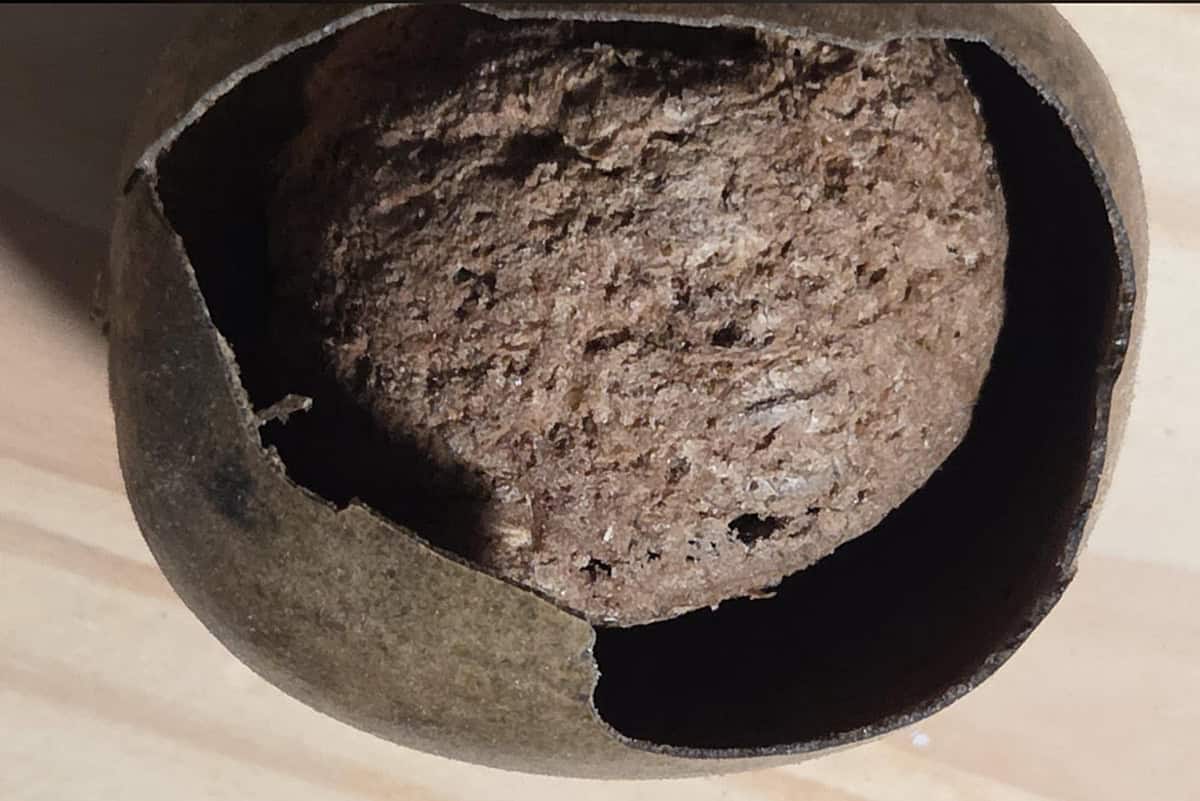
2. Remove the pith from the seeds by gently rubbing them.
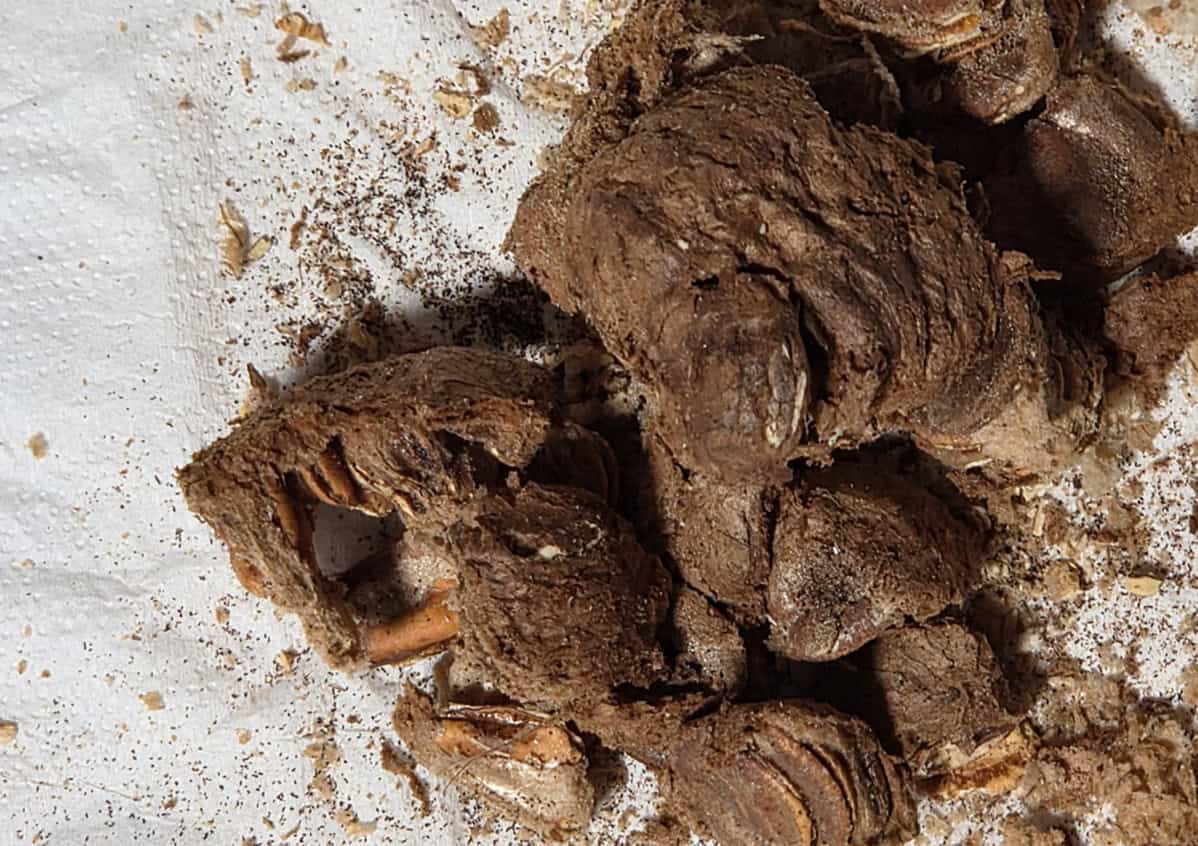
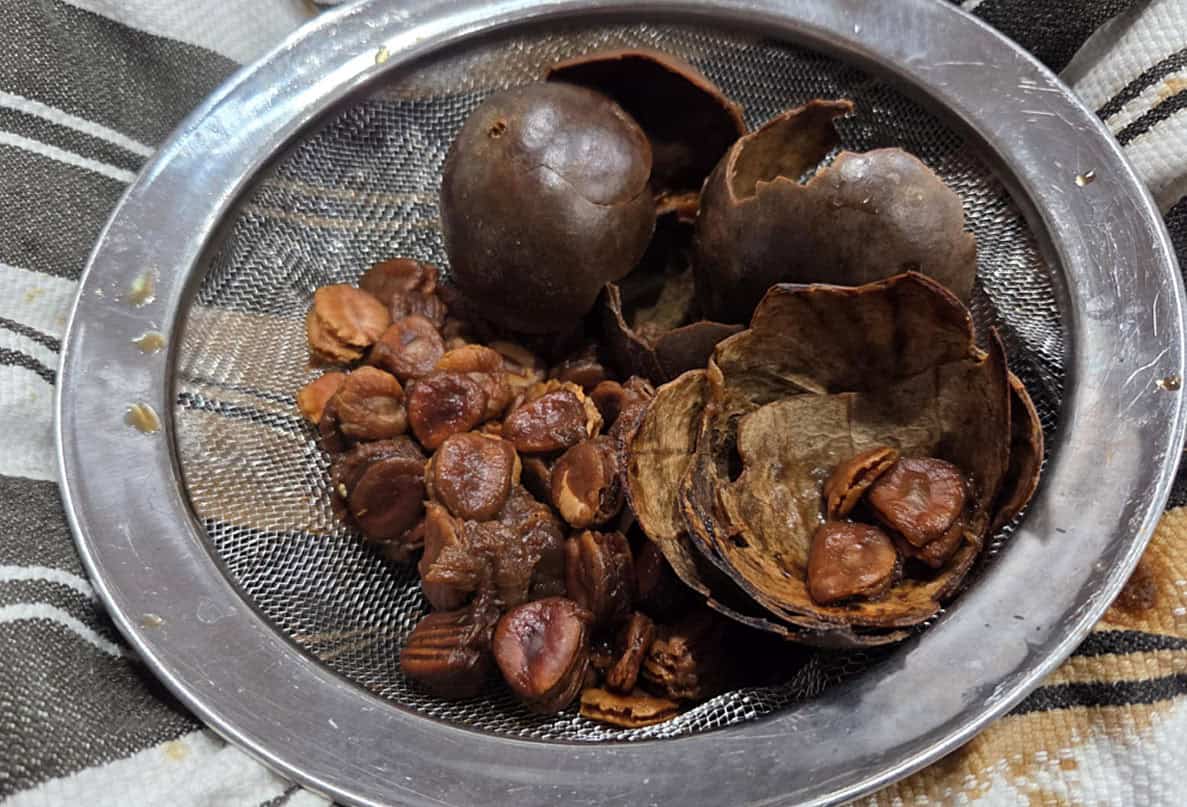
3. Rinse the shell and the seeds in cold water and then place them in 500 mls of simmering water per monk fruit. Enjoy the smell of a lolly shop in your house for the next few hours!

4. Allow to simmer, covered for up to three hours. Most of the recipes online say 20 minutes but this renders less sweetness, mostly suitable for monk fruit tea. After two hours, taste the syrup, it should be overwhelmingly sweet with a mild “fruity” aftertaste. If it’s as sweet as you’d like it to be, take it off the heat. If not, let it go for up to one more hour.
5. Strain the monk fruit through a tea towel to remove any “grit”. Discard the fruit, rinse the pot and return the “syrup” to the stove to “reduce down”.
6. Simmer on low until the mixture begins to form a “ring” on the pot. This is as concentrated as you’re going to get the mix. Remove from heat, add to a mixing jug and pour the liquid into ice-cube trays. I recommend a few large ones for baking, and some small ones for general use.
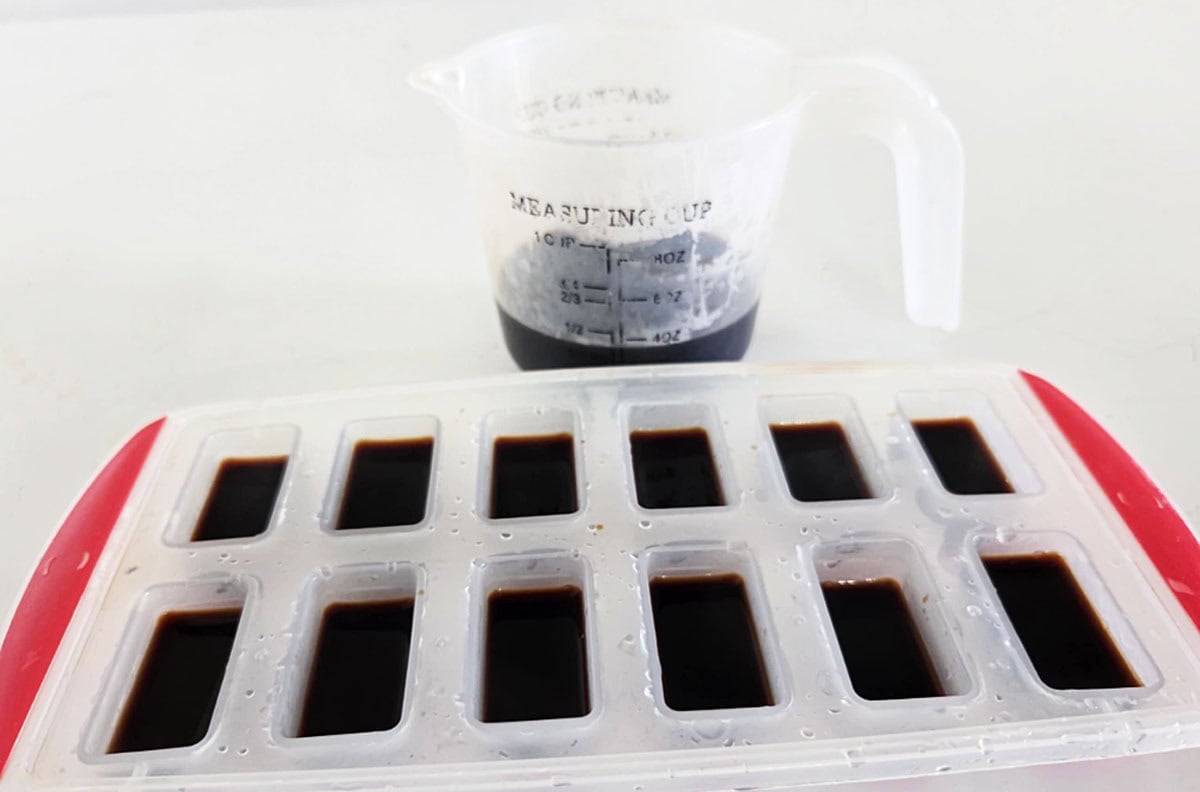
Don’t forget to taste the mixture so you know how sweet it is, and also how much “fruity” aftertaste it has. This will all come down to the individual monk fruit that you buy. The fruity flavour is completely undetectable in chocolate cakes (made with almond flour – sooooo good) and works well with fruit desserts and cakes. It works very well with strawberry-flavoured treats! It can be detectable in vanilla-flavoured desserts so, run with something a little stronger at first. Simply add it to the liquid in the recipe!
Make your own monk fruit syrup at home
It’s so simple and your house smells like a candy store! There’s no need to add fillers (although if you do plan to mix it, I recommend allulose) and it works out far cheaper than the supermarket brands.
